Pick the mission
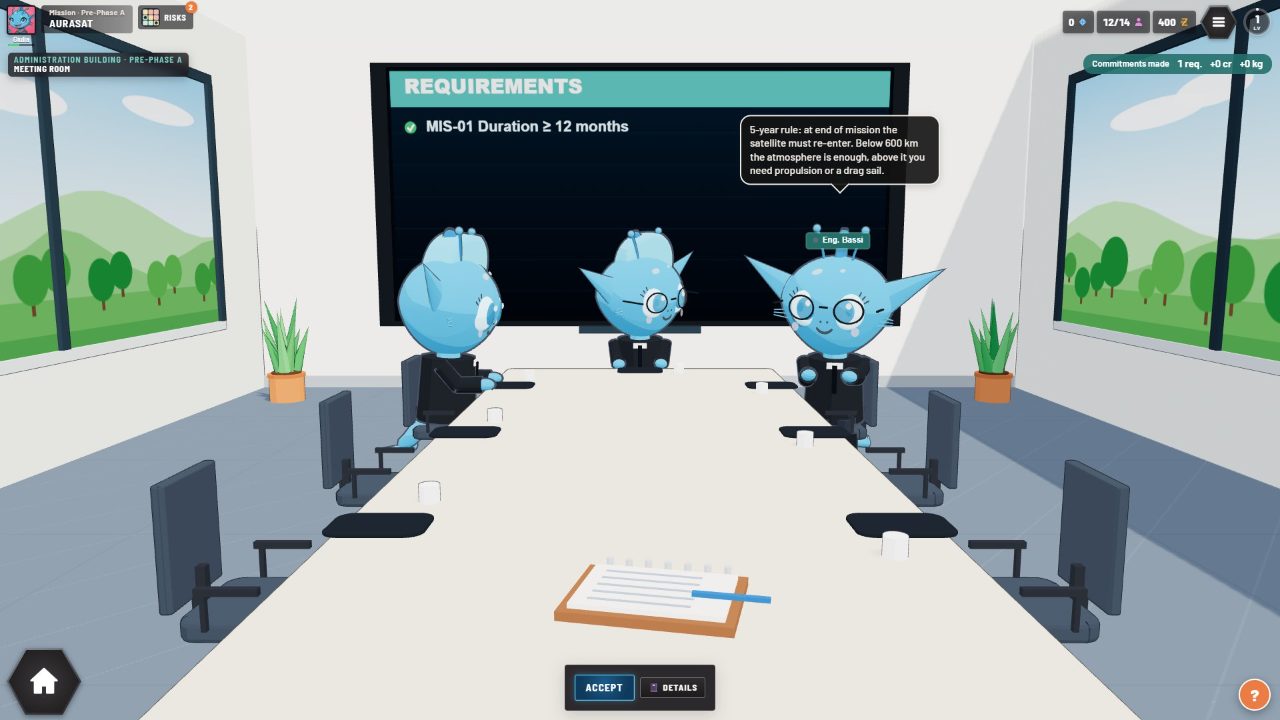
You negotiate the objectives with the stakeholders and set the requirements: science, budget and deadlines have to fit together.
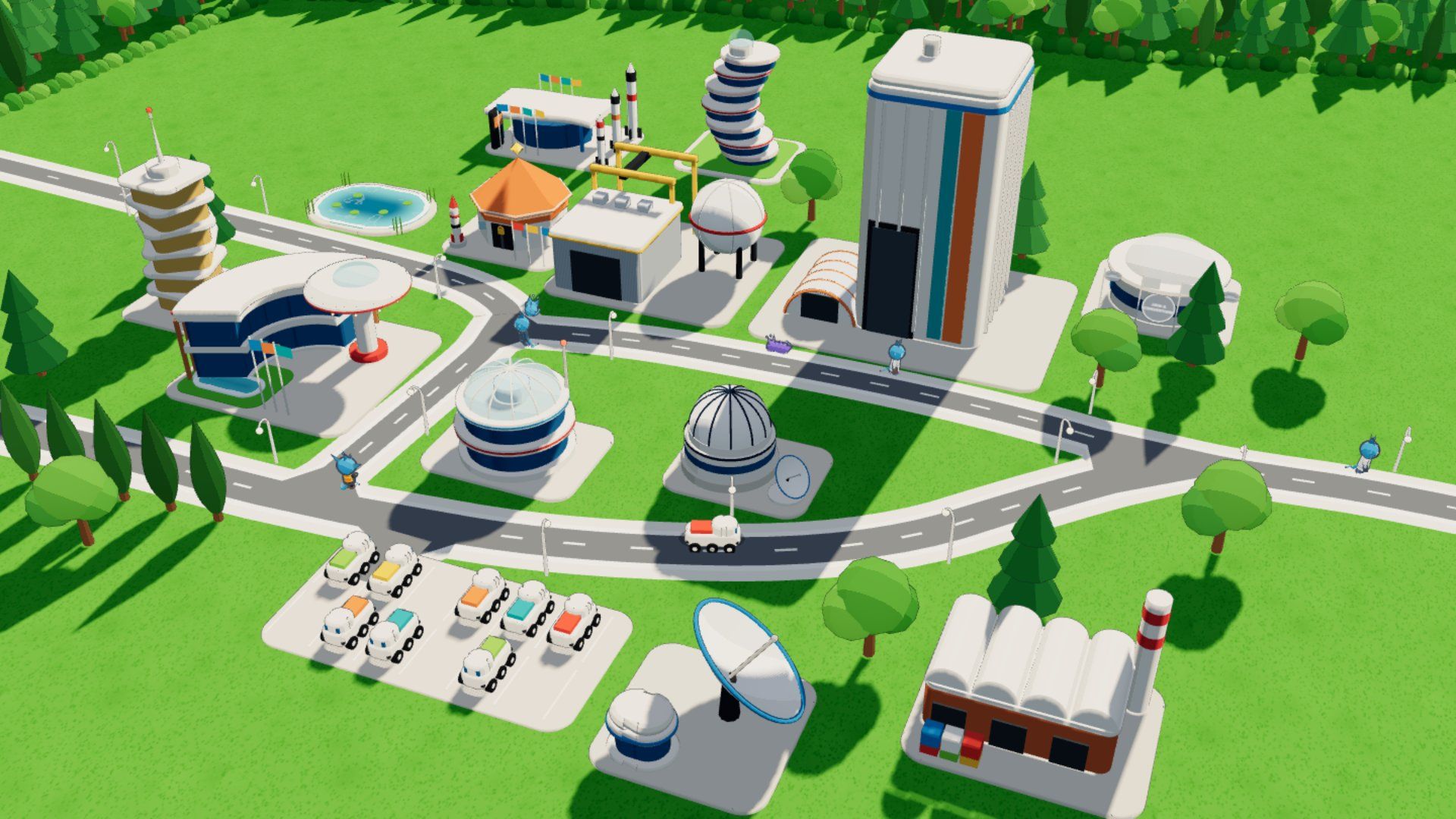

You run an agency: pick the mission, build a CubeSat, take it through testing and launch. Made for NASA Space Apps Challenge 2026 in Milan.
A real playthrough, from the campus to mission control: the CubeSat takes shape, passes its vibration test and lifts off.
It runs on a computer and on a phone, with nothing to install.
Your game stays saved in the browser you play in.
You play solo. Multiplayer missions arrive with the consortia.
The game text is in English for now.
You negotiate the objectives with the stakeholders and set the requirements: science, budget and deadlines have to fit together.
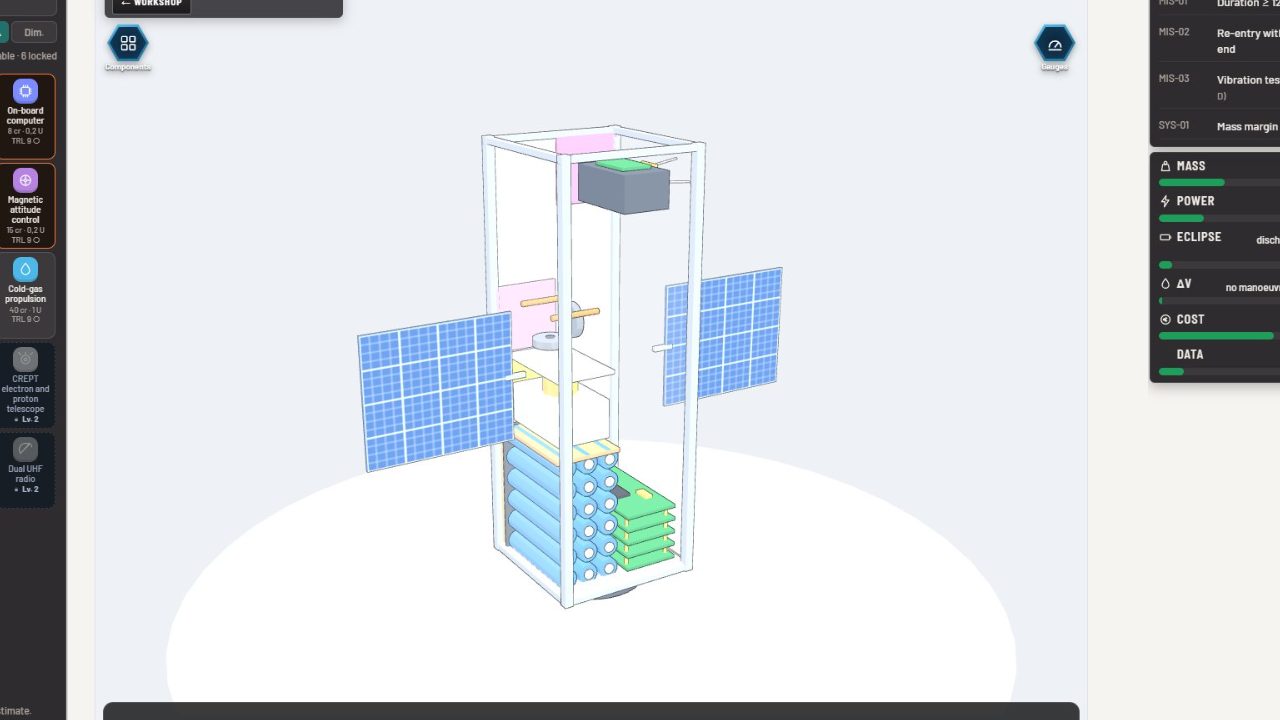
You fit instruments and subsystems one part at a time. Mass, power, data and cost change with every choice.
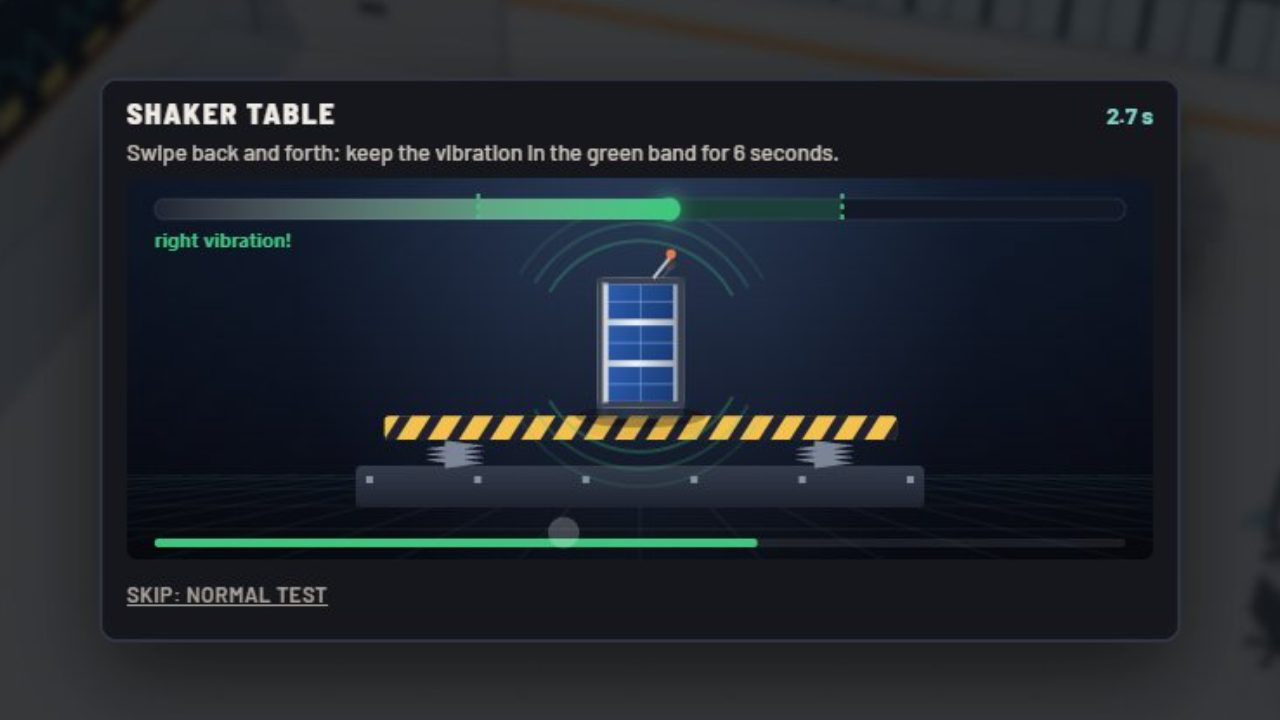
Vibration, balance and thermal vacuum are minigames. Faults have to show up on the ground.
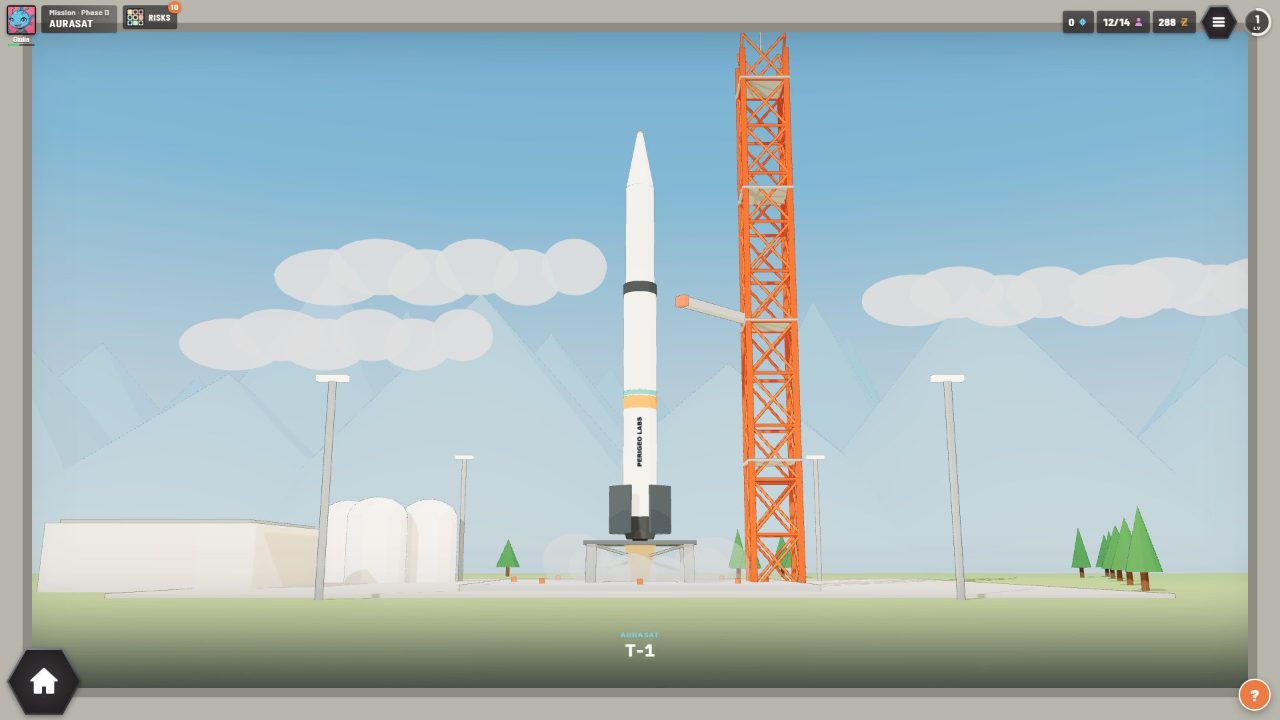
You pick the launcher by ΔV and payload capacity, then the countdown starts.
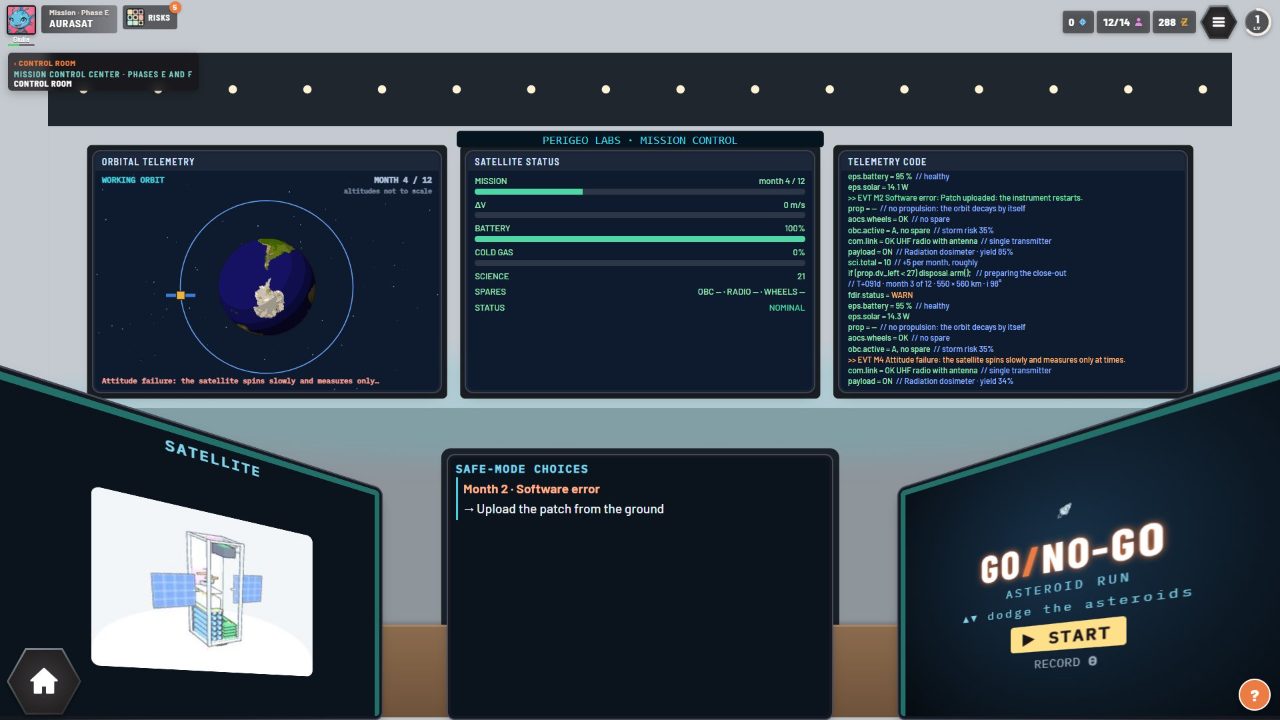
From Mission Control you follow the whole mission and decide what to do when the satellite drops into safe mode.
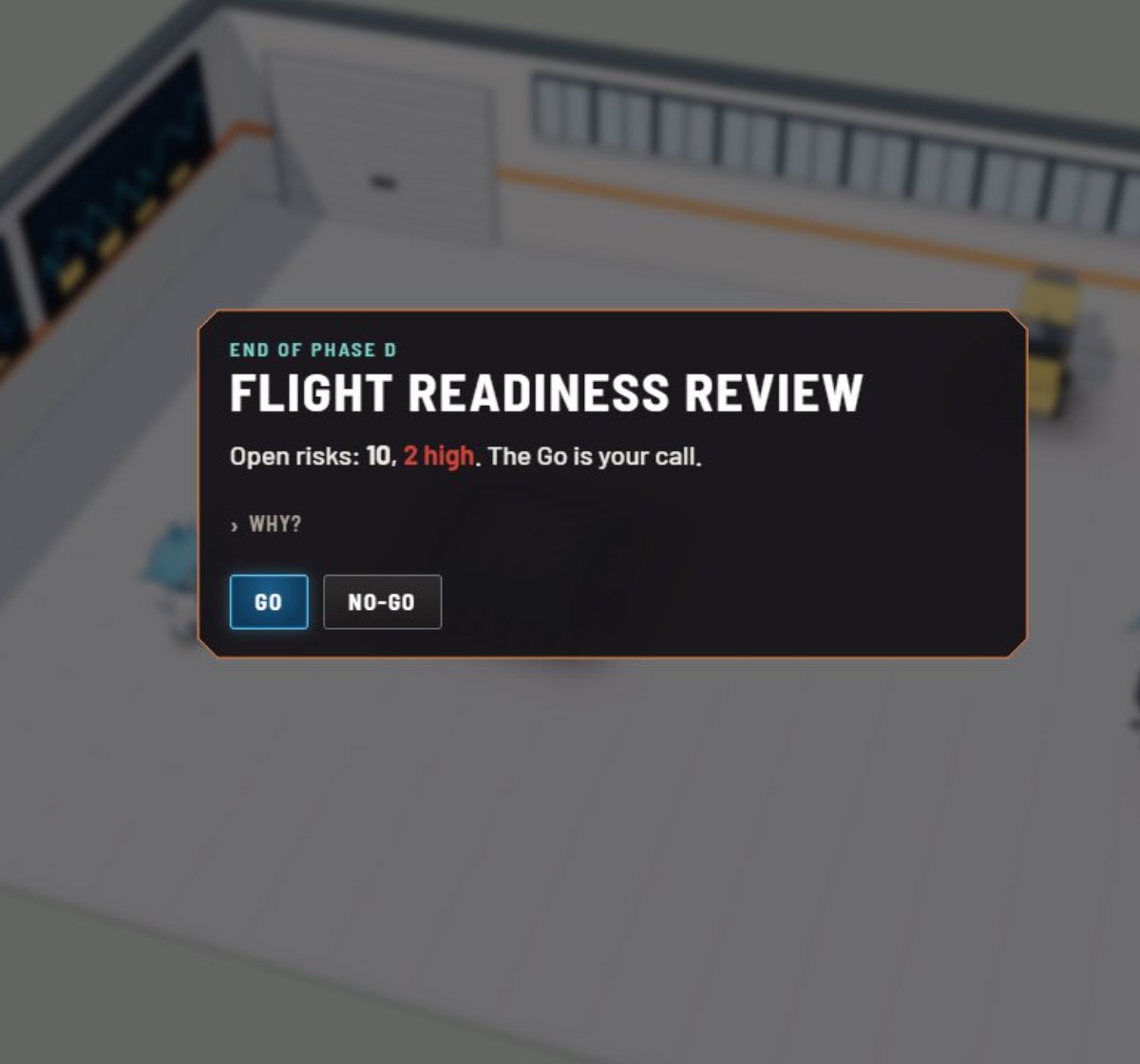
Every launch comes down to this question. You answer it with your design's numbers: mass, power, ΔV and risk.
See the methodThe project moves through phases and passes the MCR, PDR, CDR and FRR reviews.
Instruments and subsystems point to their TechPort record.
GMAT R2025a works out ΔV, eclipses and ground-station contacts for Earth, the Moon, Mars and Venus.
The path follows NASA's guide for first-time CubeSat developers.
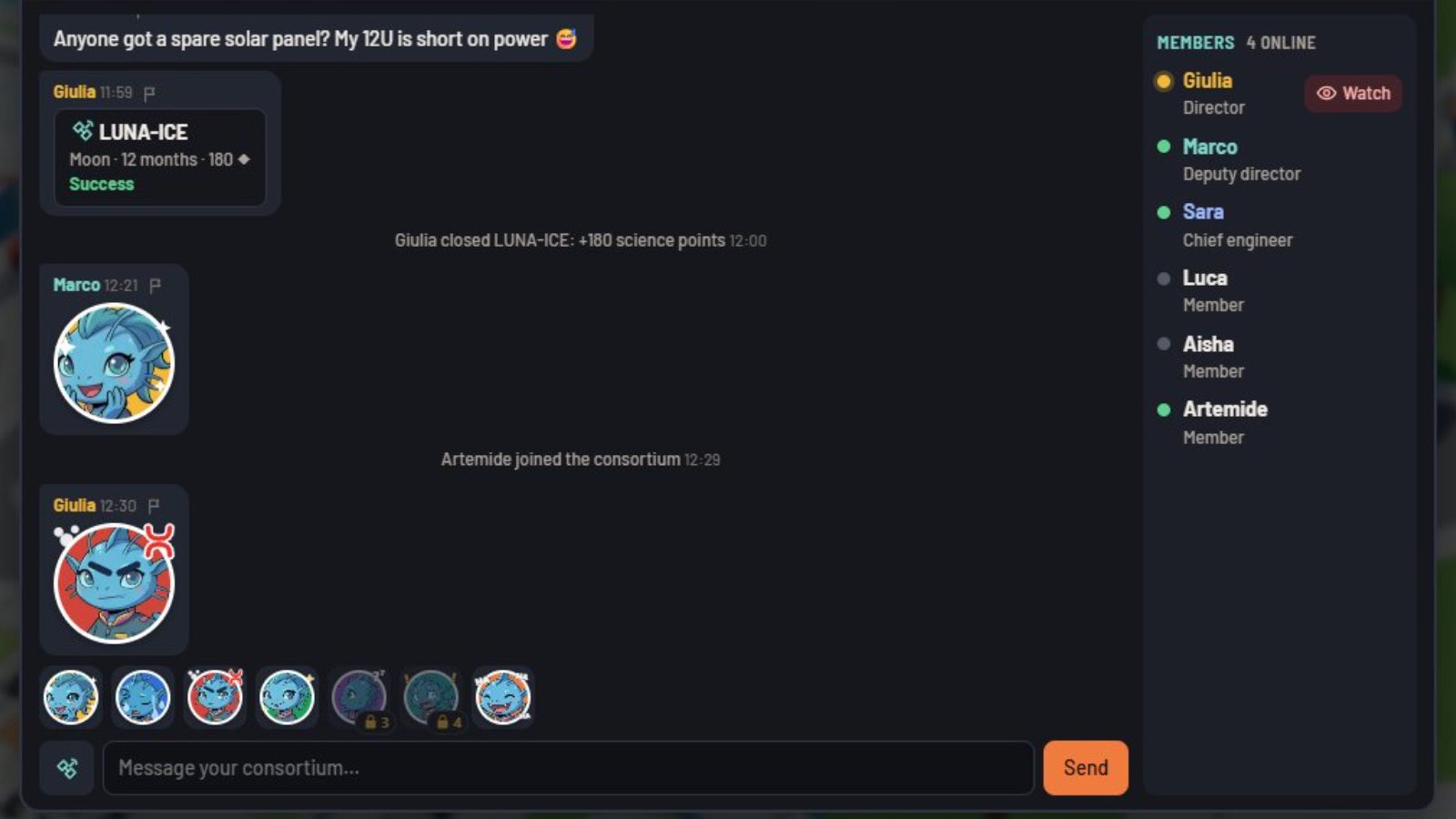
Up to four players on the same mission, each with a role: Planning, Satellite, Science or Communications. Everyone votes before launch.